






Many buyers assume any benzoate salt delivers identical antimicrobial performance across acidic food systems. That assumption collapses once the formulation demands both mold inhibition and a bioavailable zinc source, because the zinc ion in zinc benzoate CAS 553-72-0 changes solubility, thermal stability, and nutritional contribution in ways sodium or potassium benzoates cannot replicate.
Technical Support Ensure compliance and safety with our comprehensive product documentation.
Many buyers assume any benzoate salt delivers identical antimicrobial performance across acidic food systems. That assumption collapses once the formulation demands both mold inhibition and a zinc nutritional contribution, because the zinc ion in zinc benzoate CAS 553-72-0 changes solubility, thermal stability, and nutritional contribution in ways sodium or potassium benzoates cannot replicate. Shandong Ruiheng Biotechnology Co., Ltd. supplies this zinc benzoate food grade specification with assay levels at 98.0% minimum and zinc content between 19% and 22%, supporting applications where the dual function of preservation and zinc fortification matters more than single-purpose antimicrobial activity.
Used as a zinc benzoate preservative in tomato-based sauces, salad dressings, and mustard formulations where pH typically sits between 3.5 and 4.2, this benzoic acid zinc salt inhibits mold sporulation and yeast proliferation while contributing zinc ions that support label claims for mineral fortification. The slightly lower water solubility compared to sodium benzoate—approximately 23.9 g/L at 20°C—slows dissolution just enough to reduce initial flavor impact in high-acid matrices, which is why finished products maintain cleaner sensory profiles through distribution and retail shelf life.
Applied in soft breads, cracker fillings, and granola-style bars where moisture migration and ambient storage create mold risk, this antimicrobial zinc additive controls surface microbial growth without the metallic aftertaste associated with higher-solubility salts. The zinc content at 19-22% delivers measurable mineral contribution per serving when used at typical preservative addition rates, so manufacturers can simultaneously address spoilage control and nutritional positioning in clean-label product lines.
Employed as a co-stabilizer in calcium-zinc PVC formulations, this organic zinc salt for formulations scavenges free hydrochloric acid released during high-temperature processing, which prevents dehydrochlorination chain reactions that embrittle polymer chains. The benzoate ligand provides compatible dispersion in plasticizer systems, so the stabilizer distributes evenly through the polymer matrix rather than migrating to surfaces or creating bloom defects in finished extrusions.
Incorporated into water-borne architectural coatings and construction adhesives where humidity and organic additives feed bacterial and fungal growth, this zinc-based preservative powder disrupts microbial metabolism on cured film surfaces while passivating metal substrates through zinc ion activity. The dual mechanism extends in-can shelf life for the coating itself and protects the underlying substrate from corrosion during service life, which reduces field failure rates in exterior applications.
[Food & Beverage] Food and Beverage Manufacturers may evaluate this zinc benzoate food grade for preserving acidic sauces, dressings, and condiments that require extended ambient shelf life without refrigeration, while simultaneously supporting zinc fortification claims on nutritional labels.
[Food & Beverage] Bakery and Snack Producers may evaluate this zinc benzoate for controlling mold in intermediate-moisture baked goods and cereal-based snacks where clean-label preservation and mineral content positioning overlap with consumer demand.
[Industrial] Polymer Processing Operations may evaluate this benzoate zinc complex as a key functional component in non-toxic, calcium-zinc stabilization systems replacing lead-based alternatives in PVC extrusion and calendering, where regulatory pressure and environmental compliance requirements have eliminated traditional heavy-metal stabilizer options.
[Industrial] Coatings and Adhesives Formulators may evaluate this food-grade benzoate salt for antimicrobial protection in water-borne systems where in-can preservation and dry-film antifungal performance must coexist without compromising coating adhesion or color stability.
For preserving acidic sauces and condiments below pH 4.5 where microbial spoilage accelerates after opening, the 98.0% minimum assay and controlled heavy metal profile keep the antimicrobial zinc additive effective without introducing off-flavors or color shift, which is why finished products maintain sensory stability through distribution and retail shelf life.
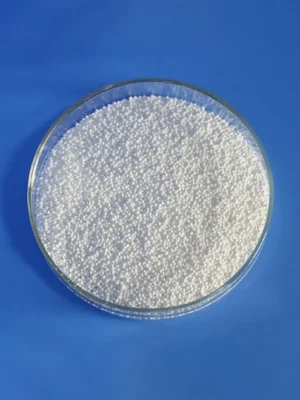
For bakery applications where moisture retention and ambient storage create ideal conditions for mold growth, the granular form option with low dust generation improves flowability in dry blending operations, so premix plants can meter the zinc source for fortification accurately without the segregation and clogging issues that fine powders cause in pneumatic conveying systems.
For PVC heat stabilization where calcium-zinc systems have replaced lead salts under environmental regulations, the 19-22% zinc content provides sufficient metal ion concentration to complex free chloride radicals during processing temperatures above 180°C, which prevents premature degradation and discoloration in finished profiles and sheets.
Note: When formulating with this zinc benzoate preservative below pH 3.0, the undissociated benzoic acid fraction rises sharply and may contribute astringent notes in sensitive flavor systems. Confirm sensory tolerance before finalizing the addition rate. For applications requiring higher solubility and neutral taste in strongly acidic beverages, our food preservation series includes sodium and potassium benzoate alternatives designed for that pH range.
| Parameter | Specification |
| CAS Number | 553-72-0 |
| EINECS Number | 209-047-3 |
| Molecular Formula | C14H10O4Zn |
| Molecular Weight | 307.62 g/mol |
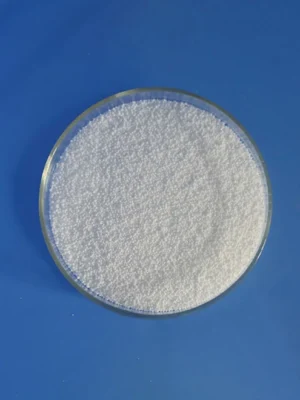
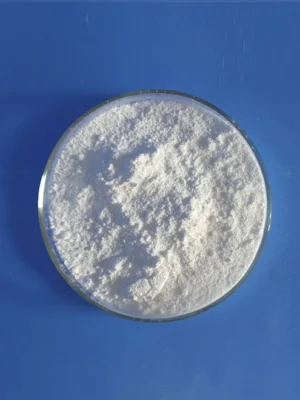
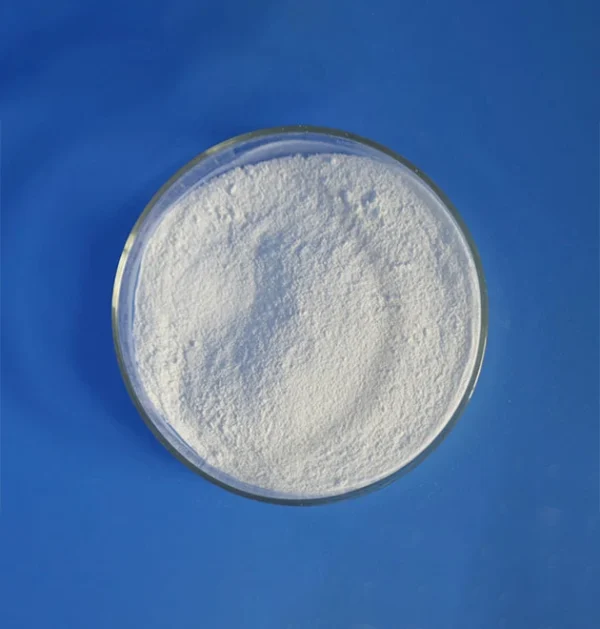
| Appearance | White or slightly yellow crystalline powder |
| Assay (Dry Basis) | ≥ 98.0% |
| Zinc Content (Zn) | 19% – 22% |
| Loss on Drying | ≤ 2.0% |
| Heavy Metals (as Pb) | ≤ 0.001% (10 ppm max) |
| Iron (Fe) | ≤ 10 ppm |
| Arsenic (As) | < 3 ppm |
| Free Acid | ≤ 0.1% |
| Solubility in Water (20°C) | ~23.9 g/L |
| Melting Point | ~248°C |
| Density (25°C) | ~1.288 g/cm³ |
Regulatory Note: Manufactured under FSSC 22000 / ISO 22000 standards. Please consult our technical team to verify specific regional food additive regulatory approvals (e.g., FDA, EFSA, or GB2760) for your target market before formulation.
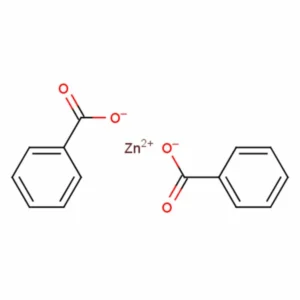
This benzoic acid zinc salt should be stored in sealed containers under cool, dry conditions with adequate ventilation. Exposure to moisture may cause caking or gradual hydrolysis, which reduces dispersibility in dry blending operations. Keep away from strong oxidizing agents and incompatible materials. The typical shelf life under recommended storage conditions aligns with standard industrial practice for powdered organic metal salts. For detailed safety information, please refer to the latest SDS.
Some formulations require particle size distribution tighter than the standard powder specification. The optional granular form with controlled mesh size supports high-speed batching in premix plants where powder fines would otherwise segregate during pneumatic transport, so blend uniformity stays within specification from first batch to last.
For PVC compounders transitioning from lead-based stabilizers to calcium-zinc systems, the food-grade specification of this antimicrobial zinc additive can be supplied alongside technical-grade calcium stearate and zinc stearate from the same production facility, which simplifies supplier qualification and reduces incoming inspection overhead when all stabilizer components ship under one batch-traceable system.
Packaging customization includes private-label kraft bags, multi-language labeling, and pallet configurations matched to destination market warehousing standards. These options matter for distributors who rebrand under their own trade names, because consistent outer packaging reduces customs clearance delays and supports retail-channel compliance in regulated markets.
Both zinc benzoate and sodium benzoate rely on undissociated benzoic acid to inhibit microbial growth, so efficacy drops as pH rises above 4.5. At pH 3.5 to 4.2, zinc benzoate food grade maintains effective preservation while releasing zinc ions more gradually than sodium benzoate dissolves, which produces milder sensory impact in sensitive flavor systems. Above pH 5.0, neither salt delivers sufficient undissociated acid fraction for reliable mold control.
Select zinc benzoate when your formulation requires both antimicrobial protection and a zinc nutritional contribution for nutritional labeling, or when lower water solubility at 23.9 g/L helps control release rate in high-acid matrices. Choose sodium benzoate when maximum solubility and rapid dissolution in strongly acidic beverages below pH 3.5 are the priority. Both options are available in our benzoates series with matching food-grade specifications.
Standard packaging is 25 kg kraft paper-plastic composite bags with double PE inner liner. For granular form orders, woven polypropylene bags with moisture barrier are available. Bulk buyers can request 500 kg or 1000 kg jumbo bags with sealed liner. Export packaging with private-label kraft bags, multi-language labeling, and pallet configurations matched to destination warehousing standards is available for distributors.
Zinc benzoate and calcium propionate target different microbial spectra and operate in different pH windows. Propionate excels against rope bacteria and mold in neutral-pH breads, while zinc benzoate performs best in acidic matrices below pH 4.5. For standard sandwich bread at pH 5.0 to 6.0, calcium propionate remains the typical choice. For acidic bakery fillings, fruit bars, or vitamin-fortified crackers where zinc content adds label value, zinc benzoate offers a viable alternative.
Shandong Ruiheng Biotechnology Co., Ltd. produces this zinc benzoate food grade with 98.0% minimum assay and zinc content at 19-22%, supporting both food preservation and industrial stabilization applications. The dual function of antimicrobial activity and zinc ion contribution differentiates this specification from single-purpose benzoate salts, which is why formulators in acidic sauces, bakery fortification, PVC compounding, and water-borne coatings evaluate it as a multifunctional additive rather than a conventional preservative.
Each batch ships with full TDS, MSDS, and COA documentation. Export packaging customization and long-term contract supply are available. For current pricing, delivery schedules, or a free sample request up to 500 g, contact our technical team directly.
Request a quote for zinc benzoate food grade bulk supply today. Get latest pricing, delivery schedule, and free sample request (≤ 500 g).