

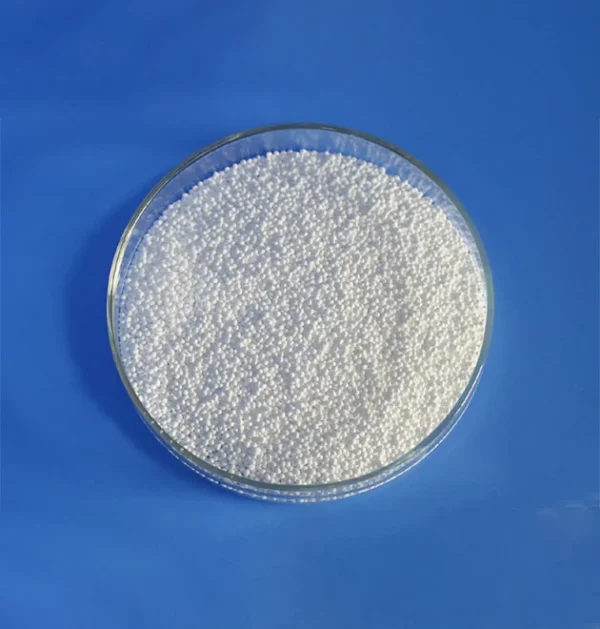


Feed grade sodium propionate is a heat-stable mold inhibitor designed for animal feed and silage preservation. It helps feed producers control mold growth under humid storage conditions, maintain feed quality during pelleting, and reduce spoilage losses.
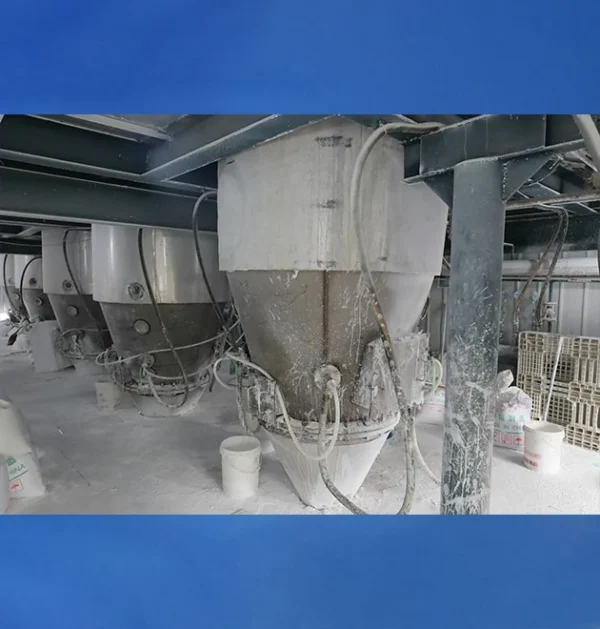
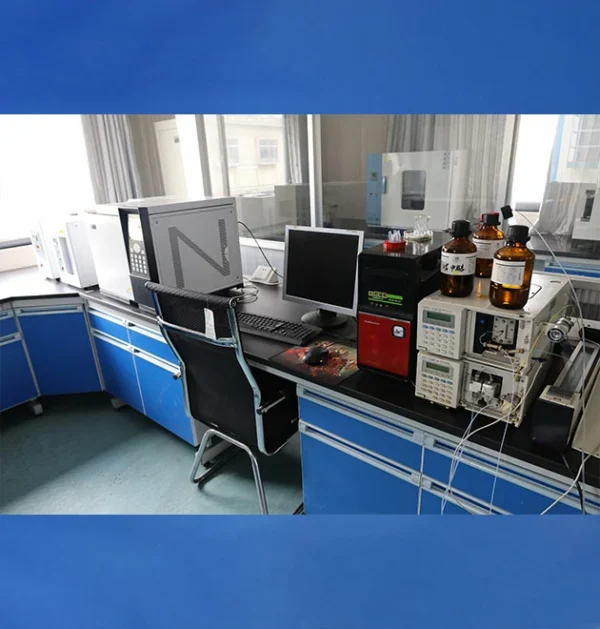
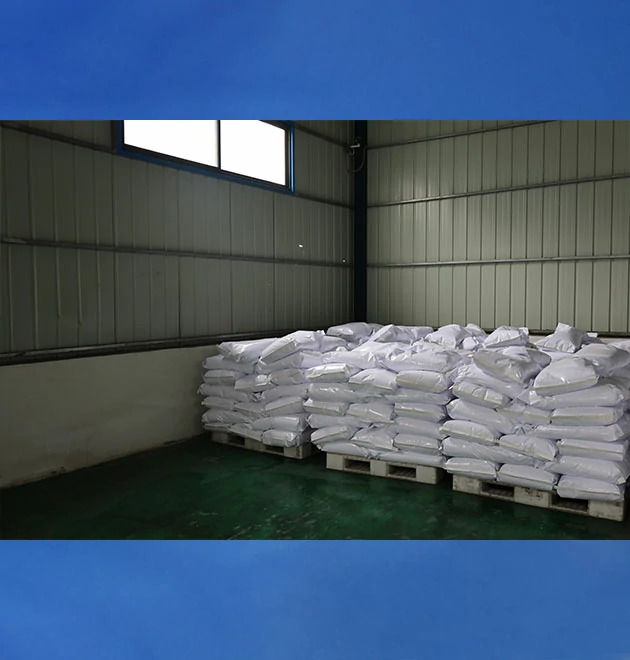
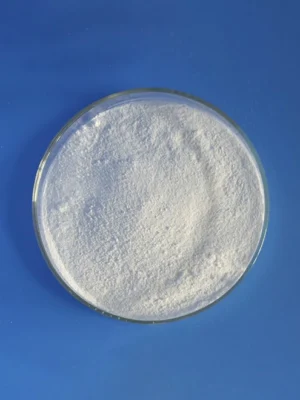
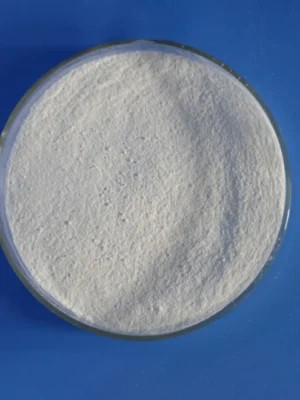
Feed producers use sodium propionate to protect stored feed materials against mold growth caused by moisture, temperature fluctuations, and long storage periods. Manufactured by Shandong Ruiheng Biotechnology Co., Ltd. at our Tengzhou facility with an annual capacity of 30,000 metric tons, our product typically assays above 99.2% on a dried basis — tighter than the 1.0% specification limit. It appears as a white, free-flowing crystalline powder, hygroscopic in moist air, with faint propionic acid odor. The compound functions as a mold inhibitor and antimicrobial agent in animal feed: in acidic microenvironments on moist grain surfaces, the propionate ion combines with hydrogen ions to form undissociated propionic acid, which penetrates mold cell walls and suppresses aerobic sporulation. Unlike calcium propionate, the sodium salt does not introduce calcium ions that can alter premix mineral balance or interact with phosphate-based vitamin carriers in high-concentration supplement formulations.
The effective dosage range spans 1.0 to 3.0 kg per metric ton of feed, depending on moisture content, ambient humidity, and storage duration. For silage preservation, application rates of 1.0 to 10.0 g per kilogram of fresh forage suppress secondary fermentation and inhibit aflatoxin-producing mold species. In poultry diets, 2.0 to 8.0 g per kilogram of feed supports mold control in mash and crumble formulations where high surface-area-to-volume ratios accelerate moisture absorption. The sodium salt’s thermal stability extends through pelleting conditioning at 80°C to 85°C without significant decomposition, maintaining antimicrobial activity through extrusion, cooling, and the subsequent storage period.
The 99.0% minimum assay leaves minimal headspace for sodium carbonate and moisture impurities. Excess carbonate would raise premix pH and destabilize acid-sensitive vitamins such as vitamin C and certain B-complex compounds. At the controlled purity level, the sodium propionate mold inhibitor grade maintains consistent propionate ion concentration, which translates to predictable antimicrobial dosing across feed batches regardless of minor variation in raw material moisture.
Thermal stability through 85°C pelleting conditioning distinguishes feed grade sodium propionate from organic acid alternatives that volatilize or decompose at elevated temperatures. Propionic acid itself boils at 141°C but evaporates readily from unprotected liquid applications. The sodium salt locks the propionate moiety in ionic form until it encounters acidic conditions on the feed surface, releasing the active acid only where mold growth initiates. This delayed-release mechanism concentrates antimicrobial action at contamination sites rather than dissipating uniformly through the feed bulk.
Water solubility at 100 g per 100 mL supports spray-on application to grain and forage surfaces, where the solution penetrates cracks and crevices in seed coats that dry powder treatments cannot reach. In silage treatment, aqueous sodium propionate for silage distributes more uniformly than granular products, reducing the incidence of untreated pockets where anaerobic bacteria and mold can establish secondary fermentation. The dissolved form also integrates into liquid feed supplements and molasses-based carriers without sedimentation.
The 1.0 to 3.0 kg per ton dosage range correlates with feed moisture content through a direct relationship: at 12% moisture, the lower end of the range suffices for 30-day storage; at 16% moisture, the upper end is necessary to maintain protection through 60 days in tropical climates. The propionate ion concentration must exceed the minimum inhibitory concentration for Aspergillus and Penicillium species, typically 0.1% to 0.3% undissociated propionic acid in the water phase of the feed surface. Higher moisture increases the water activity (aw) of the grain surface, which accelerates mold germination and demands correspondingly higher preservative loading. In field applications, feed mill operators using 20-40 mesh granular sodium propionate report significantly reduced dusting in pneumatic conveying systems compared to standard fine powders.
In ruminant nutrition, sodium propionate serves a dual function beyond mold inhibition. The propionate ion is absorbed directly from the rumen as a glucogenic precursor, supporting glucose synthesis and reducing ketosis risk in early-lactation dairy cattle. At 110 to 115 g per animal per day, the sodium salt contributes to rumen microbial protein synthesis and stabilizes rumen pH against acidosis. This metabolic role is unique to the sodium salt: calcium propionate provides equivalent mold control but delivers calcium rather than a readily metabolizable energy substrate, making sodium propionate the preferred choice when both preservation and nutritional support are formulation objectives.
For premix manufacturers, the sodium ion from sodium propionate does not interfere with phosphate-based vitamin carriers or trace mineral chelates the way calcium or magnesium ions can. In high-concentration vitamin premixes, the monovalent sodium salt helps maintain stability in vitamin and mineral premixes without precipitating insoluble calcium phosphates. That said, sodium propionate is not the appropriate choice when calcium fortification is an explicit feed design goal. In layer hen or broiler diets where calcium carbonate constitutes 8% to 10% of the formulation, calcium propionate aligns the preservative mineral contribution with the existing calcium budget. For those applications, our feed additives category includes calcium propionate as the matching propionate preservative.
Note: When treating silage with sodium propionate at rates above 5 g per kilogram of fresh forage, the sodium load contributes to total dietary sodium intake. Formulators should account for this sodium contribution in complete diet balancing, particularly for species with low sodium tolerance such as sheep or where urinary calculi prevention is a management priority. Adjust total premix sodium downward by the equivalent amount to maintain dietary electrolyte balance.
| Parameter | Specification | Test Method / Reference |
|---|---|---|
| CAS Number | 137-40-6 | — |
| EINECS Number | 205-290-4 | — |
| Chemical Formula | C₃H₅NaO₂ | — |
| Molecular Weight | 96.06 g/mol | — |
| Appearance | White, free-flowing crystalline powder | Visual |
| Odor | Faint propionic acid odor | Organoleptic |
| Assay (dried basis) | ≥ 99.0% as C₃H₅NaO₂ | Perchloric acid titration |
| Loss on Drying | ≤ 1.0% at 105°C, 3 hours | Gravimetric |
| pH (10% aqueous solution) | 7.5 – 10.0 at 25°C | pH meter |
| Water Solubility | Freely soluble; 100 g / 100 mL at 15°C | — |
| Iron (as Fe) | ≤ 30 mg/kg | Colorimetric |
| Heavy Metals (as Pb) | ≤ 10 mg/kg | Limit test |
| Arsenic (as As) | ≤ 3 mg/kg | Limit test |
| Matter Insoluble in Water | ≤ 0.1% | Gravimetric |
| Thermal Stability | Stable through pelleting at 80°C – 85°C | Validated under production conditions |
At 96.06 g/mol and typical feed inclusion rates of 1.0 to 3.0 kg per metric ton, the propionate ion loading ranges from 10.4 to 31.2 mmol per kilogram of feed. The sodium salt’s thermal stability through 85°C conditioning means the active propionate moiety survives standard pelleting and extrusion cycles with minimal decomposition. Propionic acid itself would volatilize significantly at these temperatures; the ionic sodium salt locks the active group until release at the acidic feed surface, concentrating antimicrobial action where mold contamination initiates rather than dissipating through the bulk during thermal processing.
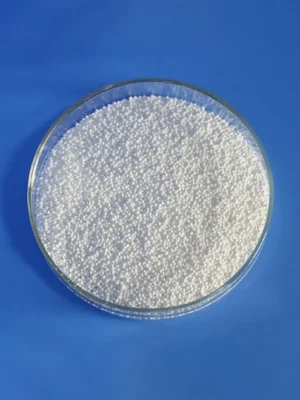
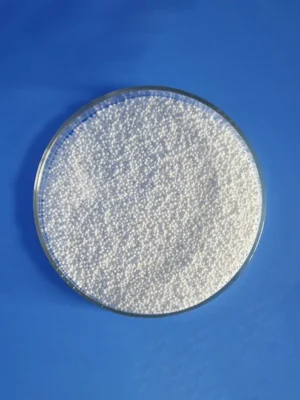
Granular feed grade sodium propionate with particle size controlled between 20 and 40 mesh reduces dust generation during pneumatic conveying and improves flowability in automated premix batching systems. Fine powders below 100 mesh create airborne dust that settles on equipment surfaces and elevates respiratory exposure for operators. The coarser granular form maintains bulk density within ±3% batch-to-batch variation, supporting volumetric feeder calibration stability in high-throughput feed mills.
Liquid propionate solutions at 20% to 30% concentration in deionized water, stabilized with pH buffering, integrate directly into spray-on grain preservation systems and liquid feed supplement lines. For silage treatment operations, the liquid form distributes uniformly across forage surfaces through standard spray bars, penetrating stem cracks and leaf crevices that dry powder treatments cannot reach. The buffered formulation prevents pH drift during storage, maintaining propionate ion stability for 30 days in sealed tanks under ambient conditions.
Custom premix blending with organic acids, mold inhibitors, or antioxidant packages allows feed formulators to combine preservation functions in a single addition step. A typical blend might pair sodium propionate mold inhibitor with citric acid for pH reduction and BHT for lipid oxidation control, reducing the number of micro-ingredient additions from three to one and cutting batch cycle time proportionally. Blending ratios and carrier selection are adjusted to match the target species, feed form, and regional regulatory requirements.
At 12% moisture, 1.0 kg per ton typically protects feed for 30 days; at 16% moisture, 3.0 kg per ton is necessary for 60-day protection in tropical conditions. Higher moisture raises water activity at the grain surface, accelerating mold germination. The propionate ion must exceed 0.1% to 0.3% undissociated acid in the surface water phase to suppress Aspergillus and Penicillium. Dosage should scale with moisture, ambient humidity, and planned storage duration rather than applying a fixed rate across all conditions.
Both salts release propionic acid for mold inhibition. Sodium propionate provides a metabolizable energy substrate for ruminants and does not interfere with phosphate vitamin carriers in premixes. Calcium propionate contributes calcium to the mineral budget, aligning with layer hen or broiler formulations where calcium carbonate already constitutes 8% to 10% of the diet. The sodium salt dissolves faster and integrates into liquid supplement lines; the calcium salt suits operations where calcium fortification is a simultaneous objective.
Sodium propionate at 1.0 to 10.0 g per kilogram of fresh forage suppresses secondary fermentation and aflatoxin-producing molds. Pure propionic acid delivers equivalent antimicrobial action but requires corrosion-resistant application equipment and poses greater handling hazards. Sodium propionate is non-corrosive to standard spray systems and safer for field operators. The sodium salt also provides rumen-available energy, which pure acid does not. Selection depends on application infrastructure, labor safety protocols, and whether nutritional energy contribution is a formulation goal.
Yes. Sodium propionate food grade carries E281 designation and conforms to FCC, GB, and EP food additive standards. It is positioned for bakery, cheese, sauce, and beverage preservation where chemical leavening compatibility, high water solubility, and food regulatory compliance are the primary requirements. The food grade specification emphasizes sensory neutrality, heavy metal limits for human consumption, and packaging suitable for food manufacturing environments rather than feed mill bulk handling.
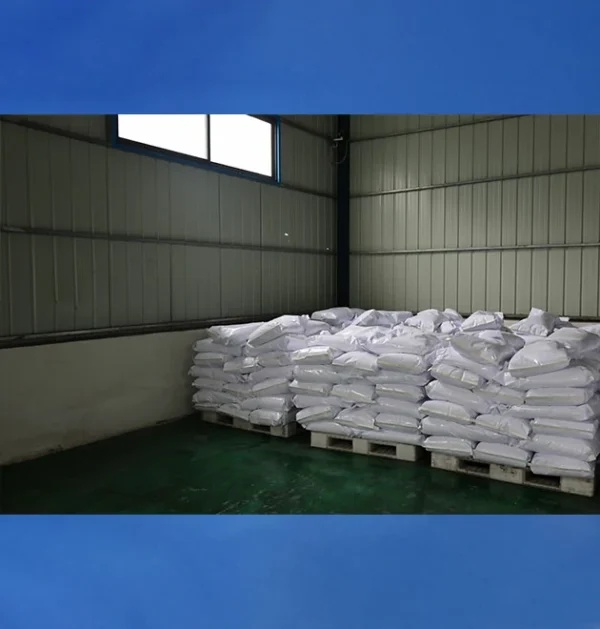
Standard MOQ is 1000 kg with a 2-week lead time from order confirmation. For first-time buyers evaluating formulation compatibility, 25 kg sample orders are available through our technical sales team.
Need feed grade sodium propionate for your silage, poultry, or ruminant feed formulation? Share your moisture targets, storage conditions, and species requirements. Our team confirms dosage rates, packaging formats, and delivery schedules for your operation.
Reviews
There are no reviews yet.